If you’re applying to competitive musical theatre or acting programs, chances are you’ll face a pre-screen audition before being invited to a live audition. For many students, this is the most confusing—and stressful—part of the process.
What exactly are colleges evaluating? Is it all about talent? Or are there hidden factors that determine whether you move forward?
In this guide, we’ll break down what colleges are really looking for in pre-screen auditions, along with actionable pre screen audition tips to help you stand out and increase your chances of getting a callback.
What Is a Pre-Screen Audition?
A pre-screen audition is a video submission required by many top acting schools and musical theatre programs in the U.S. before granting you a live audition slot.
Instead of seeing thousands of applicants in person, colleges use pre-screens to:
- Narrow down candidates
- Evaluate potential early
- Save time during audition season
Think of it as your first impression—and sometimes your only chance to get in front of the decision-makers.
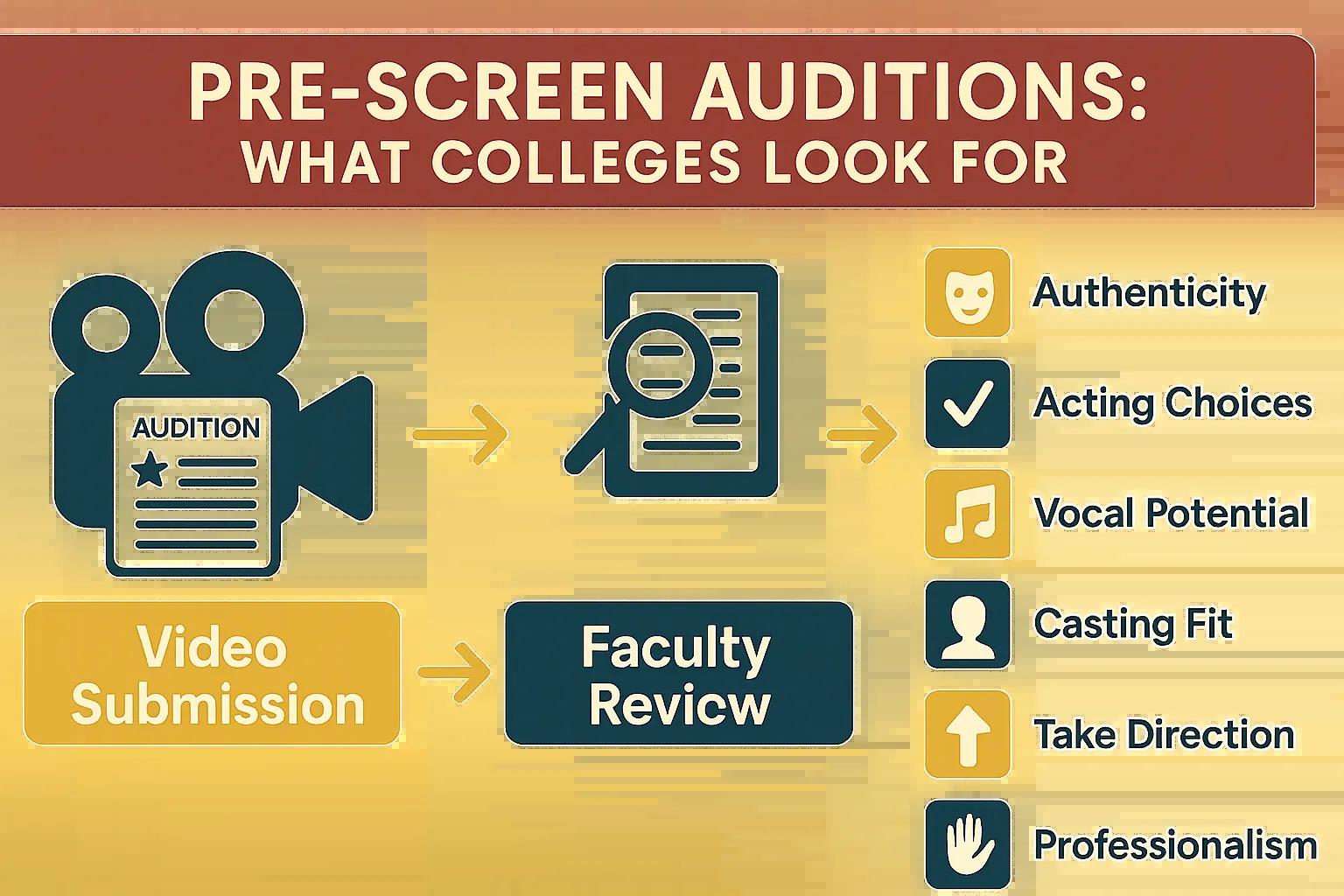
What Colleges Are REALLY Looking For
Many students believe they need to be “perfect” to pass pre-screens. That’s not true.
Colleges are not expecting Broadway-level performances. Instead, they are evaluating potential, authenticity, and trainability.
Let’s break it down.
1. Authenticity Over Perfection
The number one thing colleges look for is authenticity.
They want to see:
- Who you are as a performer
- Your natural personality
- Honest emotional connection
What this means for you:
- Don’t overact or try to impress
- Avoid copying other performers
- Focus on truthful storytelling
Big mistake: Trying to sound or act “professional” instead of being real.
2. Strong Acting Choices
Even in singing auditions, acting comes first.
Colleges are asking:
- Do you understand the material?
- Are your choices clear and specific?
- Can you tell a story effectively?
What stands out:
- Clear emotional shifts
- Intentional pauses and reactions
- A strong connection to the lyrics or text
This is where most applicants fall short—they sing well but don’t act the song.
3. Vocal Potential (Not Just Skill)
Yes, your voice matters—but colleges are listening for potential, not perfection.
They’re evaluating:
- Tone quality
- Range suitability
- Control and pitch
- Ability to grow with training
Important:
You don’t need to be flawless. Cracks or minor mistakes won’t ruin your chances.
They’re asking: “Can we train this student for the next 4 years?”
4. Clear Type and Casting Fit
Every performer has a “type”—and colleges pay attention to it.
They want to understand:
- Where you fit in casting
- Your age range and personality
- Your overall vibe as a performer
Example:
- Are you more comedic or dramatic?
- Do you play youthful roles or mature ones?
Choosing the right material helps communicate this clearly.
5. Ability to Take Direction (Indirectly)
Even though pre-screens are recorded, colleges still assess coachability.
How?
Through:
- Your preparation level
- Your understanding of material
- Your performance choices
A well-prepared audition shows that:
- You can follow guidance
- You respect the process
- You’re serious about training
6. Professionalism and Effort
Colleges also evaluate how seriously you take the audition.
This includes:
- Following instructions exactly
- Submitting on time
- Proper formatting and framing
Ignoring guidelines is one of the fastest ways to get rejected.
Top Pre Screen Audition Tips to Stand Out
Now that you know what colleges are looking for, let’s talk about how to deliver it.
1. Follow Instructions Exactly
Each school has specific requirements:
- Slate format
- Video length
- Framing guidelines
Do not improvise.
If they ask for:
- A full-body dance shot → give full body
- A 60-second monologue → don’t exceed
Attention to detail = professionalism
2. Focus on Video Quality (But Keep It Simple)
You don’t need expensive equipment.
What matters:
- Good lighting (natural light works best)
- Clear audio (this is critical)
- Neutral background
Avoid:
- Busy backgrounds
- Poor sound quality
- Over-editing
Your performance should be the focus—not production effects.
3. Choose the Right Material
Your material should:
- Match your age and type
- Showcase your strengths
- Allow emotional connection
Avoid:
- Overdone songs
- Material that’s too mature
- Songs outside your vocal range
Smart choices can instantly elevate your audition.
4. Keep It Natural for Camera
Pre-screens are not stage performances—they’re on-camera auditions.
Adjust your performance:
- Use smaller, more controlled expressions
- Avoid exaggerated gestures
- Stay grounded and connected
👉 Think “film acting,” not “stage acting.”
5. Nail Your Slate
Your slate (introduction) is part of your audition.
Include:
- Your name
- The pieces you’ll perform
Keep it:
- Confident
- Friendly
- Professional
First impressions matter more than you think.
6. Record Multiple Takes (But Don’t Overdo It)
It’s okay to record several versions—but don’t chase perfection endlessly.
Best approach:
- Do 3–5 strong takes
- Choose the most natural one
👉 Sometimes the “imperfect” take feels the most real.
7. Get Expert Feedback
This is where college audition help becomes valuable.
A coach or mentor can:
- Help you choose the right material
- Refine your performance
- Catch mistakes you don’t notice
👉 Many successful applicants don’t do it alone—they get guidance.
Common Pre-Screen Mistakes to Avoid
Avoiding mistakes can be just as important as performing well.
Overacting
Trying too hard to impress often feels fake.
Ignoring Guidelines
Even small mistakes can lead to rejection.
Poor Audio Quality
If colleges can’t hear you clearly, your audition won’t stand out.
Wrong Material Choices
Material that doesn’t suit you can hurt your chances.
Lack of Preparation
Unpolished performances are easy to spot.
What Happens After You Submit?
Once your pre-screen is submitted:
- Faculty review your videos
- They compare you with other applicants
- Decisions are sent (pass/fail or callback)
If you pass:
You’ll be invited to:
- Live auditions
- Unified auditions
- Or virtual callbacks
If you don’t:
It’s not the end—many factors affect decisions, including:
- Program fit
- Class balance
- Competition level
Final Thoughts
Pre-screen auditions are your gateway into top acting schools and musical theatre programs. While they can feel intimidating, understanding what colleges are truly looking for gives you a major advantage.
Focus on:
- Authentic storytelling
- Strong, clear choices
- Proper preparation
- Professional presentation
And remember—colleges aren’t searching for perfection. They’re looking for potential, personality, and passion.
Need Help With Your Pre-Screen Audition?
Navigating pre-screens alone can be overwhelming. From choosing the right material to filming and submitting correctly, every step matters.
If you’re looking for expert college audition help, getting guidance can dramatically improve your chances of passing pre-screens and landing auditions at top programs.
Start early, stay consistent, and approach the process strategically—and you’ll be one step closer to your dream school.